
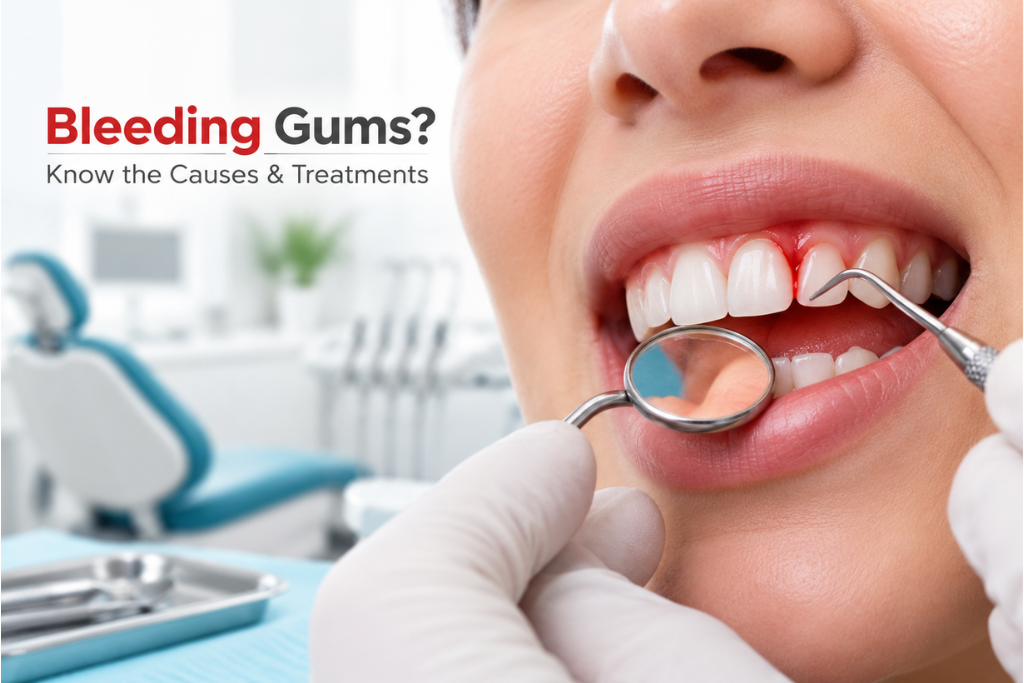
Have you ever seen blood in the sink when brushing your teeth? It may not seem like a big deal, and if you’re not bleeding excessively, it’s probably nothing to panic about, but bleeding gums can actually signal your mouth needs some extra attention. Maybe it’s just because you brush too hard sometimes, but there could be underlying reasons for your bleeding gums.
The majority of the problems which the gums are struggling with can be treated when diagnosed early. If you are looking for the spot to visit and get to the root of the problem then visit us, the best dentist in Kharar.
Why Do Your Gums Bleed While Brushing?
Your normal diet shouldn’t be leaving your gum tissue bleeding as you floss and brush normally. If you do notice blood every time you do so, it’s definitely something you will need to investigate.
1. Plaque and Tartar Buildup
The number one most common explanation of bleeding gums is due to plaque. “Plaque is the coating of bacteria that constantly sits on your teeth,” the expert says. If you don’t remove plaque, it turns into tartar. And when this hard deposit of plaque stays on your teeth, it irritates your gums and causes them to bleed – along with redness and swelling.
Regular cleaning is effective at removing plaque and tartar that you cannot reach with your toothbrush.
2. Gingivitis: Early-Stage Gum Disease
Gingivitis develops from plaque accumulation along the gumline and is a very common form of gum disease.
Symptoms to watch out for include:
- Bleeding while brushing or flossing
- Red or swollen gums
- Tenderness at the gum line
- Ongoing oral odor
The bad news? It’s easy to reverse with a pro cleaning, plus good dental habits. If left unaddressed, however, gum disease can progress.
3. Brushing Too Hard
Think if you brush harder, you’ll get teeth that are cleaner? Well, excessive force can cause the gums to become irritated, and the tissue to weaken over time. That might be from using a hard-bristled toothbrush or brushing too aggressively.
Use a soft-bristled toothbrush and gentle circular motions to avoid harming your gums.
4. Periodontitis: Advanced Gum Disease
Gingivitis that goes untreated can progress to a far more serious stage called periodontitis. Periodontitis is an infection that will affect the tissue and bone that support your teeth. Watch out for ongoing bleeding, loss of gum tissue, loose teeth, and difficulty chewing.
The damage may not be reversible, although, as noted, the damage can be somewhat reversed in the case of gingivitis. This makes a diagnosis and treatment, therefore, critical.
5. Other Possible Causes
Gum bleeding can also be caused by other issues such as:
- Pregnancy and hormones
- Vitamin deficiencies
- Certain medications, like blood thinners
- Changes in brushing or flossing habits
- Medical conditions impacting gum health
A check-up is useful in determining if the bleeding is from a local dental problem or if the patient needs to be referred for medical investigations.
How To Stop Bleeding Gums With Dental Treatments
The proper course of action depends on the type and severity of the problem. Your dentist will examine your teeth and gums to determine the most effective treatment option.
Professional Scaling and Cleaning
If plaque and tartar are the cause of the problem, then professional scaling is perhaps the best course of action. This process cleans away the hardened deposits on your teeth and around your gum line, decreasing bacterial accumulation and assisting inflamed gum tissue to recover.
Deep Cleaning for Gum Disease
Individuals with periodontitis may have to undergo root planing and cleaning. It is used to remove plaque and tartar below the gumline and also to polish root surfaces for healthy gum healing. Some may require further periodontal treatment based on the severity.
Related Dental Issues Treatment
At other times, it may be a cavity, a tooth that has cracked, or an infection.
You may also have to manage these. For example, if you have an infected tooth, you may consult a root canal dentist in Kharar who will have the offending tooth assessed and if that’s the case a root canal is recommended. Remember, it’s the infection inside the tooth that needs resolving, not bleeding gums.
How Can You Prevent Bleeding Gums at Home?
You don’t need a fancy routine to care for your gums. A few good habits every day can add up to huge benefits.
- Use a fluoride toothpaste twice a day with a soft-bristled toothbrush.
- Fill in this area by cleaning between your teeth each day with floss or interdental brushes.
- Refrain from brushing too hard, as it can cause sensitive gums to become irritated.
- Eat a healthy, balanced diet.
- Avoid tobacco-based products, which increase the risk of gum disease.
- Have regular dental checkups and cleanings as directed.
Don’t assume your home remedies are going to work just because your tooth gum keeps bleeding. A dentist can help find out what is causing your bleeding gums.
When Should You Visit a Dentist for Bleeding Gums?
Bleeding that persists, is accompanied by swelling, persistent bad breath or recession of the gum line, or causes loose teeth should be examined by a dentist.
Come to R&R Home Of Teeth for a professional assessment of your gum problems and get to know the possible treatment options.
Conclusion
Don’t ignore bleeding gums when you brush. Whether it’s caused by plaque buildup, brushing habits, or gum disease, biting the bullet and treating bleeding gums is a smart way to avoid worse oral health issues.
We are here to help you know more about your dental problem and assist you in making better decisions for the health of your mouth. If bleeding has become a recurring problem, schedule your dental appointment today to give your gums the attention they need.
